Redness & vascular
From temporary flushing to visible capillaries,
we examine the pattern and duration of redness and what irritates your skin.
Redness caused by dilated vessels
and skin reactions
Redness and vascular conditions occur when facial blood vessels repeatedly dilate or skin inflammation persists,
causing redness on the cheeks, nose, forehead, and other areas.
They can take many forms, from flushing that comes and goes, to rosacea with persistent redness,
to telangiectasia with visible fine vessels.
At RE:A CLINIC, we don't simply focus on fading the redness; we also assess the size and location of the vessels,
as well as your skin barrier and inflammation.

Keys to redness & vascular treatment
We assess the cause of redness, vessel distribution, and skin sensitivity, then choose the device and intensity that fit your current condition.
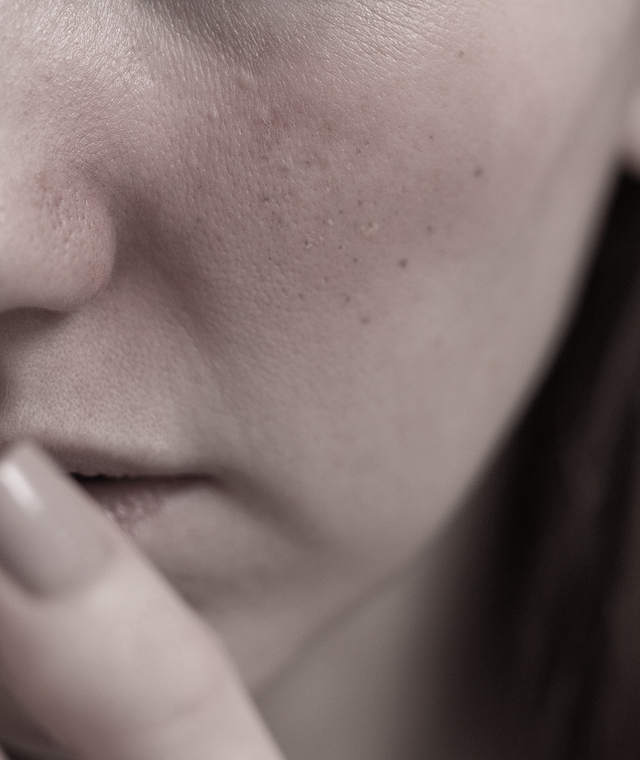
Identifying the type of redness
We distinguish temporary flushing, persistent erythema,
and visible blood vessels.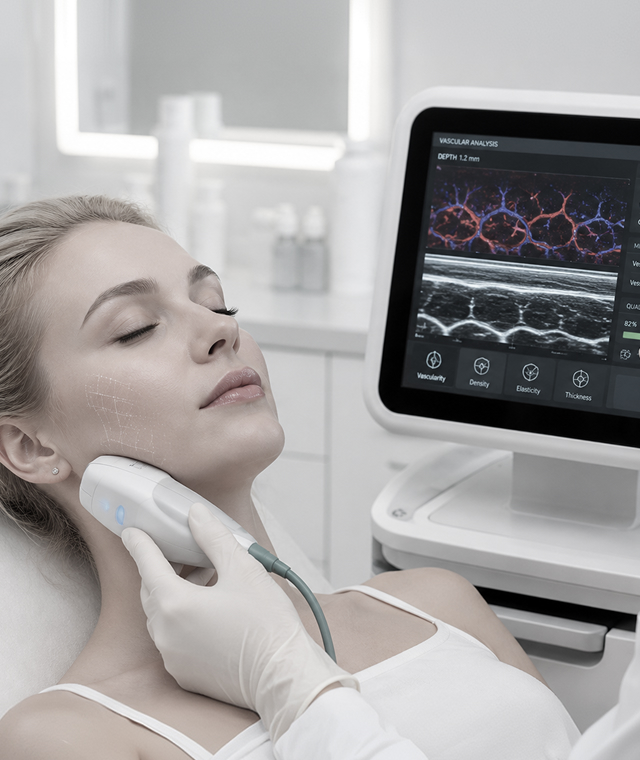
Checking vessel size & depth
We examine where the vessels sit and how they spread
to choose the right wavelength and intensity.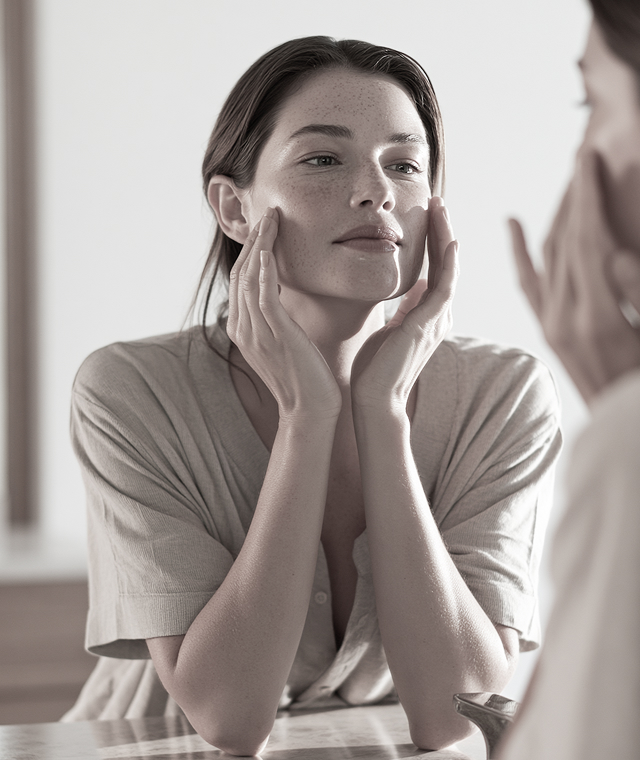
Considering skin sensitivity
For skin prone to heat and stinging,
we carefully adjust treatment intensity.
Managing triggers together
We also help manage factors that worsen redness,
such as UV exposure and temperature changes.
Skin conditions
by type of redness
We look at the extent and duration of redness and the size and distribution of vessels to find the right approach for flushing, spider veins, or post-inflammatory redness.
Facial flushing
The face suddenly turns red and then calms down,
triggered by temperature changes, emotions, or exercise.
Persistent erythema
Redness in the center of the face, such as the cheeks, nose, and forehead,
that does not easily fade and lasts a long time.
Telangiectasia
Thin red blood vessels that show through
the skin surface like fine lines.
Rosacea
A chronic skin condition that may involve recurrent flushing, persistent redness, burning,
dilated vessels, or inflammatory lesions.
Post-inflammatory red marks
Red marks that linger long after acne
or dermatitis has calmed down.
Redness & Vascular Concerns
Redness & vascular treatments at RE:A CLINIC
We assess your flushing pattern, degree of vessel dilation, and skin sensitivity, then choose the treatment that fits your current condition.

Skin & vessel assessment
We check where redness appears and how long it lasts,
along with vessel size and skin sensitivity.

Customized laser & injection treatment
We apply the laser and injection treatments needed
for your type of redness, vessels, and skin condition.

Skin barrier care
Soothing and moisturizing care after treatment
helps sensitized skin settle down.
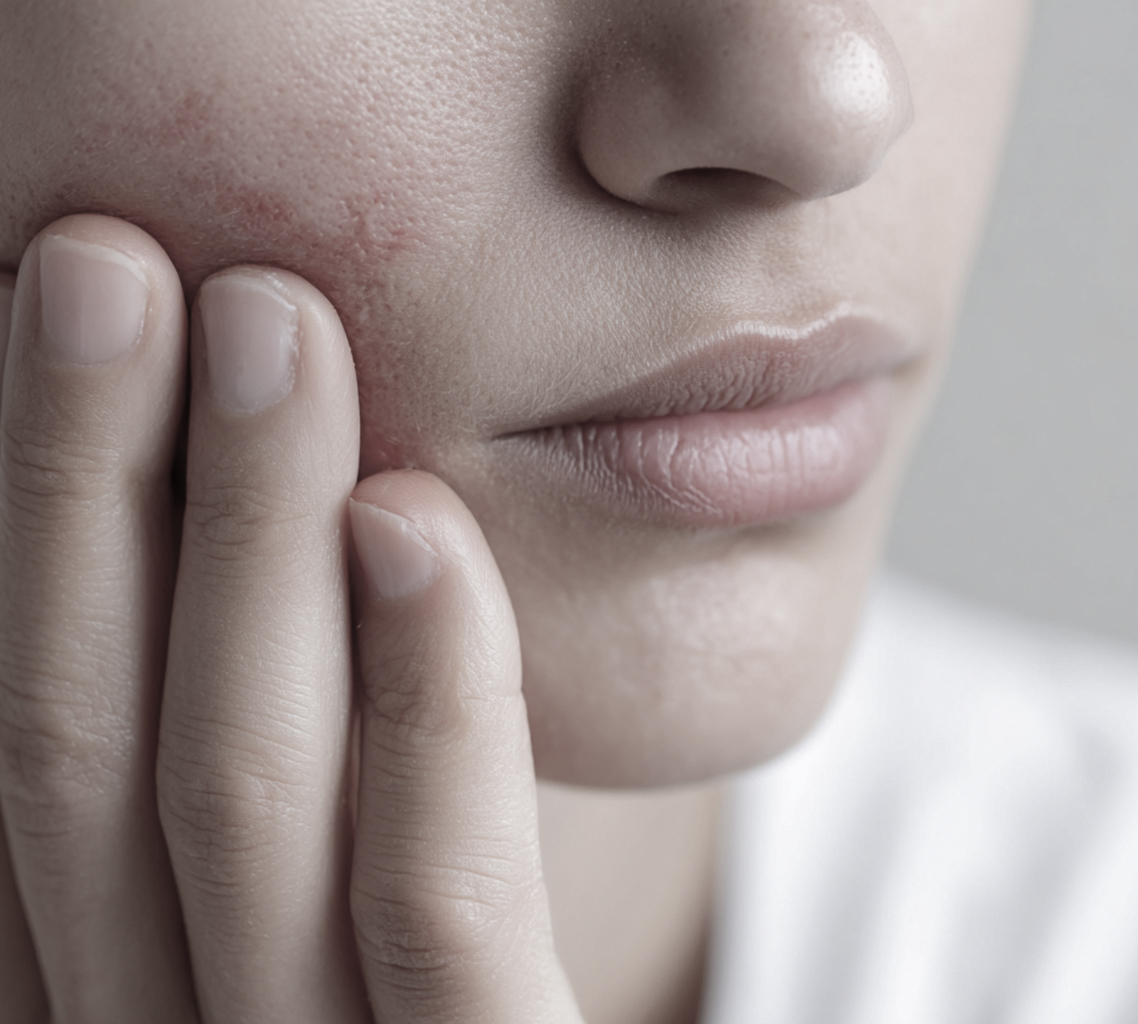
Aftercare precautions
- Do not rub or strongly irritate the treated area.
- Apply sunscreen when going out and avoid strong sun exposure.
- Avoid alcohol, saunas, jjimjilbang (Korean spas), and strenuous exercise on the day of treatment.
- Avoid washing your face with hot water and sudden temperature changes.
- Keep up with moisturizing and soothing care.
Redness & vascular
FAQ
- Q Are facial redness and rosacea the same condition?
-
A
Redness is a symptom that can have many causes, while rosacea is a chronic inflammatory skin condition marked by persistent redness and dilated vessels.
They are distinguished by examining the pattern of redness and accompanying symptoms. - Q Can visible blood vessels be treated with a laser?
-
A
Depending on the size, depth, and location of the vessels, laser or light-based treatment may be considered.
We choose the right device and energy after checking your skin condition. - Q Can redness disappear after just one treatment?
-
A
The number of sessions depends on the cause and extent of redness and the depth of the vessels.
We check your skin's response after each treatment to set the intensity and interval of the next. - Q Can my face get redder after treatment?
-
A
Warmth, redness, and swelling may appear temporarily right after treatment.
These usually subside gradually, but if symptoms are severe or persist, please consult our medical team. - Q Can redness come back?
-
A
Flushing and rosacea can worsen again with triggers such as UV exposure and temperature changes.
Even after treatment, sun protection, skin barrier care, and managing triggers are necessary.
